
Best Japanese Chef Knives for Precision Cutting and Control
If you’ve ever struggled with uneven slices, crushed herbs, or meat that just won’t cut cleanly, you already know how frustrating a dull or bulky knife can be. That’s where Japanese-style chef knives stand out. Known for their razor-sharp edges and lightweight feel, they’re designed to give you total control—whether you’re making paper-thin vegetable cuts or precise protein slices. The difference isn’t just in performance; it’s in how much easier and more enjoyable cooking becomes.
To help you find the right option without going down a rabbit hole of endless choices, we’ve done the heavy lifting for you. After digging into top-rated products, comparing features, analyzing real user feedback, and reviewing purchase trends, we’ve narrowed it down to the most reliable picks. These are the knives people actually love using—saving you time, guesswork, and potential regret.
How We Selected These Products
We used an advanced AI-driven research process to analyze thousands of customer reviews and expert opinions across multiple platforms. By identifying consistent patterns in performance, durability, and user satisfaction, we were able to highlight only the most trusted and well-loved options. This approach ensures transparency and gives you confidence that every recommendation is backed by real-world experience—not just marketing claims.
Overviews
Imarku Japanese Chef Knife
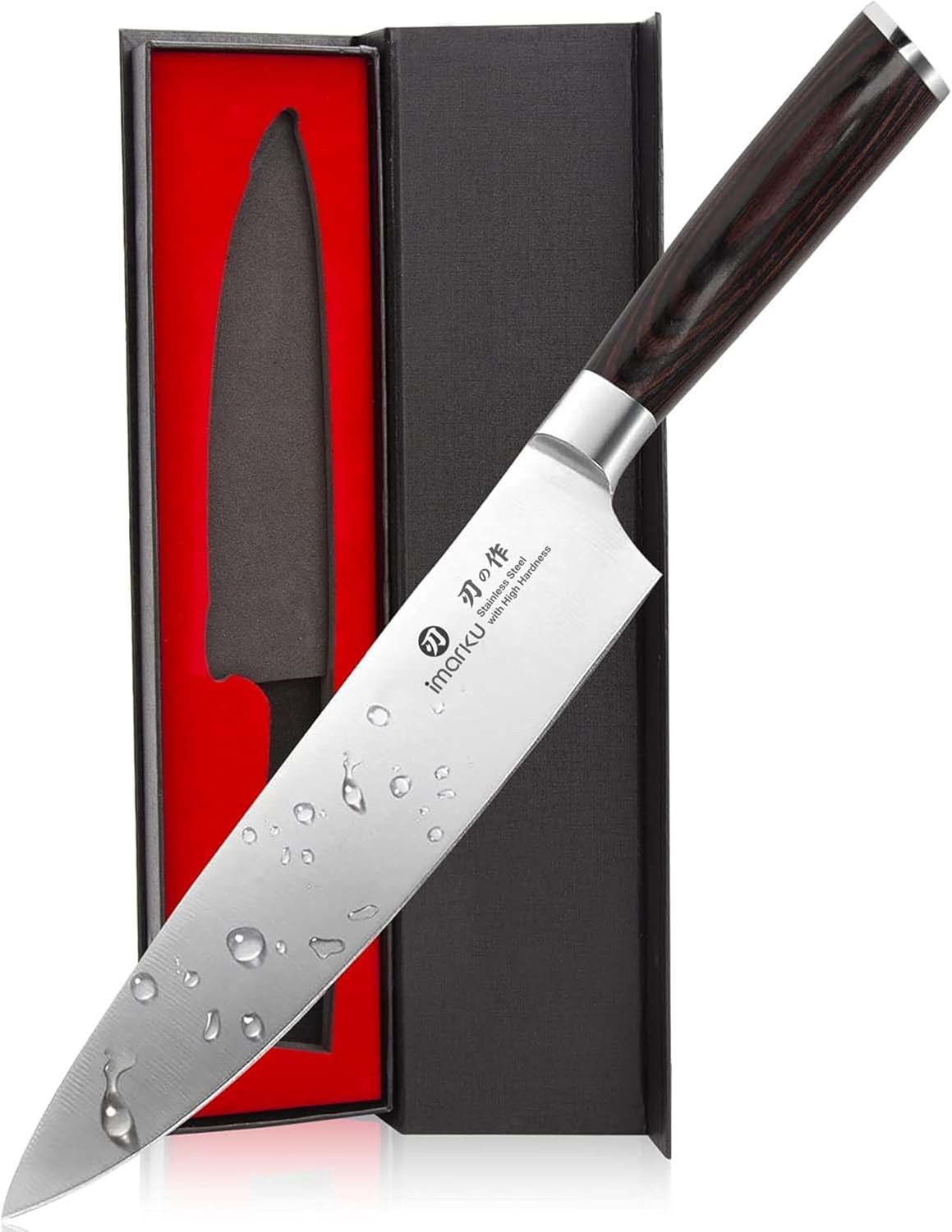

This Japanese-style chef knife features a high-carbon stainless steel blade designed for sharpness, durability, and smooth cutting performance. Its edge allows for clean slicing of vegetables, meats, and herbs, while the ergonomic pakkawood handle provides comfort and control during extended use. The blade is crafted to reduce sticking and maintain consistent cuts, making it suitable for precise kitchen tasks, though it may require regular sharpening to keep optimal performance.
Pros
- Razor-sharp edge enables clean, precise cuts on vegetables, meat, and herbs with minimal effort.
- High-carbon stainless steel offers good durability and resistance to rust and corrosion.
- Ergonomic pakkawood handle provides a comfortable, non-slip grip for better control during detailed cutting.
- Lightweight and well-balanced design helps reduce fatigue during longer prep sessions.
Cons
- Edge retention is moderate, meaning it may require more frequent sharpening than premium knives.
- Build quality and finish are decent but not on par with higher-end professional Japanese knives.
- Single-bevel design may feel less versatile for some users, especially left-handed cooks.
Verdict
A solid budget-friendly option for precise cutting tasks, especially for home cooks. It delivers sharp performance and good control, but falls slightly short in long-term edge retention and premium build quality. Overall, a strong value pick rather than a top-tier choice.
Imarku Nakiri Chef Knife

This Nakiri-style Japanese chef knife is designed with a thin, straight-edged blade that excels at clean, precise vegetable cutting. Made from high-carbon stainless steel, it delivers sharp, smooth slicing while maintaining durability and resistance to rust. The hammered finish helps reduce food sticking, and the ergonomic handle provides control and balance, making it effective for detailed prep work. While it performs very well for vegetables and fine cuts, it is less versatile for tasks that require rocking motion or heavy-duty cutting.
Pros
- Thin, straight blade allows clean, precise cuts without crushing delicate vegetables.
- Razor-sharp edge supports fine slicing, dicing, and detailed prep work with minimal effort.
- Hammered blade design helps reduce food sticking, improving cutting efficiency.
- Ergonomic handle offers a secure grip and good control for precision-focused tasks.
- Lightweight and balanced design reduces fatigue during repetitive cutting.
Cons
- Primarily designed for vegetables, making it less versatile than a traditional chef knife.
- Flat edge limits rocking motion, which may feel restrictive for some users.
- Edge retention is decent but may require regular maintenance for consistent sharpness.
- Not ideal for heavy-duty tasks like cutting through bones or very tough ingredients.
Verdict
A strong choice for precision vegetable prep, delivering clean, controlled cuts with ease. It’s highly effective within its niche but less versatile than a general-purpose chef knife, making it a great secondary knife rather than an all-in-one solution.
HOSHANHO Japanese Chef Knife

This Japanese-style chef knife is made from high-carbon stainless steel (10Cr15CoMoV), offering strong sharpness, durability, and resistance to rust. The blade is hand-sharpened to a fine angle for smooth, precise cutting, making it suitable for slicing vegetables, meats, and herbs with control. Its ergonomic wooden handle supports a stable grip and balanced movement, helping improve accuracy during detailed prep work. While it performs well for everyday precision tasks, it may not match the refinement or edge retention of premium high-end Japanese knives.
Pros
- High-carbon stainless steel provides solid sharpness and durability for consistent, precise cutting.
- Hand-sharpened edge allows smooth slicing with minimal resistance, improving accuracy.
- Ergonomic wooden handle supports a comfortable grip and better control during fine cutting tasks.
- Well-balanced design helps maintain stability, reducing effort during repetitive prep work.
- Good corrosion resistance makes it suitable for regular kitchen use without excessive maintenance.
Cons
- Edge retention is good but may still require regular sharpening compared to premium Japanese knives.
- Overall build and finishing are solid but not at a professional artisan level.
- Curved blade design is less specialized for ultra-precise straight cuts compared to some Japanese styles.
- Brand positioning leans more toward budget-friendly performance rather than high-end craftsmanship.
Verdict
A reliable mid-range option that delivers strong sharpness and control for precise cutting tasks. It performs well for everyday use and offers good value, but it falls short of true high-end Japanese knives in refinement and long-term edge retention.
Mitsumoto Sakari Gyuto Knife

This Gyuto-style chef knife features a hand-forged blade made from layered high-carbon 9CR18MOV steel, designed to deliver sharpness and durability for everyday kitchen tasks. The blade structure and forging process help create a fine edge that slices smoothly through vegetables, meat, and herbs, supporting precise cutting control. Its rosewood handle offers balance and a comfortable grip, improving handling during detailed prep. While it performs well for general precision work, it may not offer the same edge retention or refinement as higher-end, traditionally crafted Japanese knives.
Pros
- Layered high-carbon steel provides good sharpness for clean, controlled slicing and detailed prep work.
- Hand-forged blade design helps improve cutting smoothness and overall edge performance.
- Gyuto shape offers versatility, allowing both precision slicing and general kitchen use.
- Rosewood handle delivers a comfortable grip and balanced control during extended use.
- Attractive finish and craftsmanship give it a premium visual appeal for its price range.
Cons
- Edge retention is moderate and may require regular sharpening to maintain peak precision.
- Steel quality is decent but not comparable to high-end Japanese knife materials.
- Marketing suggests traditional Japanese craftsmanship, but materials and origin may differ from expectations.
- Overall refinement and consistency may vary compared to premium professional-grade knives.
Verdict
A decent mid-range option for precise cutting with good sharpness and versatility. It performs well for everyday kitchen use, but it falls short of true high-end Japanese knives in craftsmanship and long-term edge retention, making it a reasonable but not top-tier recommendation.
KAWAHIRO Chef Knife VG10 Gyuto

This Japanese-style Gyuto chef knife is built with a VG10 stainless steel core designed for strong sharpness and smooth, controlled slicing. The hand-forged blade structure supports precise cutting through vegetables, meat, and herbs, making it useful for detailed kitchen prep. Its balanced design and ergonomic handle help improve control during fine slicing tasks, allowing more accuracy with less effort. While it delivers strong performance for precision cutting, it sits more in the mid-range category and may not offer the consistency or long-term edge retention of premium traditional Japanese knives.
Pros
- VG10 steel core provides strong initial sharpness for clean, precise slicing.
- Hand-forged construction improves cutting smoothness and overall control.
- Well-balanced design supports stability during detailed cutting tasks.
- Ergonomic handle enhances grip comfort for longer prep sessions.
- Versatile Gyuto shape works well for vegetables, meat, and herbs.
Cons
- Edge retention may be inconsistent compared to high-end Japanese knives.
- Premium craftsmanship claims may not match traditional artisan-level standards.
- Requires regular maintenance to maintain peak sharpness.
- Positioned as mid-range rather than professional-grade performance tool.
Verdict
A capable option for precision-focused home cooking, offering solid sharpness and control for everyday slicing tasks. It performs well in practice, but it does not fully reach the refinement or long-term durability expected from high-end Japanese chef knives.
How Precision Chef Knives Work & Who Needs Them
Japanese-style chef knives are designed around a simple idea: maximum sharpness with minimal effort. Their blades are thinner, harder, and more finely sharpened compared to standard Western knives, which allows them to glide through ingredients instead of crushing or tearing them. This results in cleaner cuts, better texture preservation, and more visually appealing food preparation. The balance and lightweight feel also reduce hand fatigue, making repetitive chopping or slicing more comfortable over time.
These knives are especially useful for people who value accuracy in the kitchen. Home cooks who prepare fresh vegetables daily, food enthusiasts who enjoy plating and presentation, and anyone working with delicate ingredients like herbs or fish will benefit the most. Even professional chefs rely on them for tasks that demand precision and consistency.
- Ideal for clean slicing of vegetables, herbs, and boneless meats
- Best suited for users who prioritize control and accuracy over brute force cutting
- Helpful for home cooks, culinary students, and professional chefs
What to Look for in a Japanese Chef Knife
When choosing a Japanese chef knife for precision cutting, blade material is one of the most important factors. High-carbon stainless steels such as VG10 or similar alloys are commonly preferred because they balance sharpness, durability, and rust resistance. A thinner blade geometry typically delivers cleaner cuts, but it may require more careful handling and maintenance. Edge angle also matters, as sharper, finer edges allow for more precise slicing but may dull faster if not properly maintained.
Ergonomics and balance play a major role in long-term comfort. A well-designed handle—whether wood, pakkawood, or composite—should feel stable and secure without slipping. Weight distribution between the blade and handle should feel natural in hand, reducing strain during repetitive cutting tasks. Another key consideration is intended use: some knives are optimized for vegetables (like Nakiri styles), while others (like Gyuto knives) offer more versatility for meats and mixed prep work.
Key Buying Factors:
- Blade steel type (VG10, high-carbon stainless, or layered steel for durability and sharpness)
- Edge geometry and sharpness level for precision slicing
- Balance between blade and handle for comfort and control
- Handle material and grip stability during extended use
- Knife style suitability (Gyuto for versatility, Nakiri for vegetables, etc.)
Common Mistakes to Avoid:
- Choosing overly cheap knives that lose sharpness quickly
- Ignoring maintenance needs such as sharpening and proper storage
- Picking the wrong knife style for your cooking habits
- Overlooking handle comfort in favor of blade appearance
Common Advantages and Limitations
Japanese chef knives designed for precision cutting offer several clear advantages. Their biggest strength is sharpness—these blades are engineered to achieve extremely fine edges that allow effortless slicing. This leads to cleaner cuts, better ingredient integrity, and improved presentation, especially when working with fresh produce or delicate proteins. They also tend to be lighter than many Western knives, which helps reduce fatigue during long cooking sessions.
Another major benefit is control. The balance and blade design make it easier to perform detailed cutting tasks with accuracy, which is especially valuable for chefs who focus on presentation or fine preparation techniques. Additionally, many of these knives use high-quality steel that provides good durability and corrosion resistance when properly maintained.
However, there are also limitations. The sharp, thin edge can be more fragile than heavier Western-style knives, meaning it may chip or dull faster if misused. They often require more regular sharpening and careful maintenance to stay at peak performance. Some designs are also less versatile, making them less suitable for heavy-duty tasks like cutting through bones or frozen foods.
Overall, they strike a balance between performance and delicacy, excelling in precision work but requiring more care and attention than standard kitchen knives.
Is It Worth Buying a Japanese Precision Chef Knife?
For anyone serious about cooking or looking to improve their kitchen efficiency, a Japanese-style chef knife is often worth the investment. The improvement in cutting precision alone can transform everyday food preparation, making tasks faster, cleaner, and more enjoyable. Whether you’re slicing vegetables paper-thin or preparing proteins with accuracy, the difference in control and sharpness is noticeable from the first use.
That said, it is not a one-size-fits-all tool. These knives require proper care, including regular sharpening and mindful use, to maintain their performance. If you are willing to maintain them, they can last for years and consistently deliver excellent results. For casual cooks who rarely prepare detailed meals, the benefit may be less significant, but for anyone who values precision and quality in cooking, it becomes a highly rewarding tool in the kitchen.

![The Best, High-Performance Blenders For Your Kitchen [2026]](https://cookery.help/wp-content/uploads/2026/04/professional-grade-blender-for-smoothies-768x512.png)


